

FIRST COMMUNITY RESOURCE CENTRE
People our Passion
Stay up to date with what's happening at First Community Resource Centre — from programme updates and community events to stories of impact from Hanover Park. This is where we share our journey, one story at a time.
Get Involved
City of Cape Town challenged over Ceasefire project’s funding and results
Genevieve Serra | Published
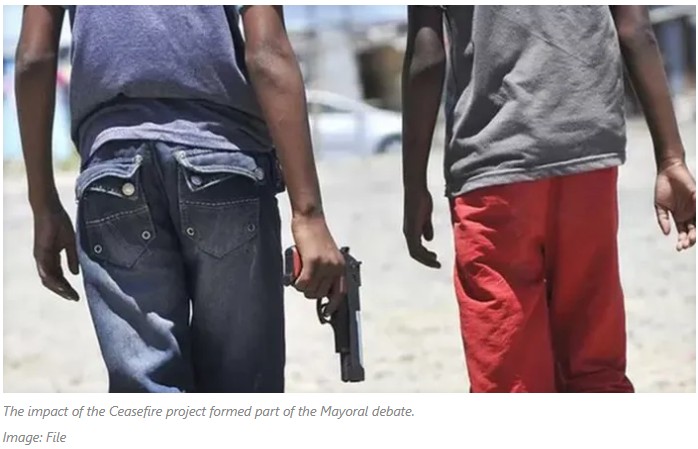
As political parties debated some of the city’s most pressing challenges during a robust debate among 11 political party representatives this week, a local NPO which assists with gang member rehabilitation, said more than 400 young people involved in gun violence or the transportation of firearms were assisted by the Ceasefire Project.
According to the project’s head, this intervention, has reduced crime by 43% in the most hard-hit areas.
During the debate issues highlighted were the housing crisis, unemployment, gangsterism, homelessness, and access to basic municipal services.
The project was funded by the City of Cape Town for eight years, but its financial support has since been withdrawn.
Today, the project continues to operate as Ceasefire Lite, providing youth intervention services without funding from the City.
Pastor Craven Engel of the Ceasefire Lite Project provided the figures that Deputy Mayor Eddie Andrews could not provide during the mayoral debate hosted in Cape Town this week.
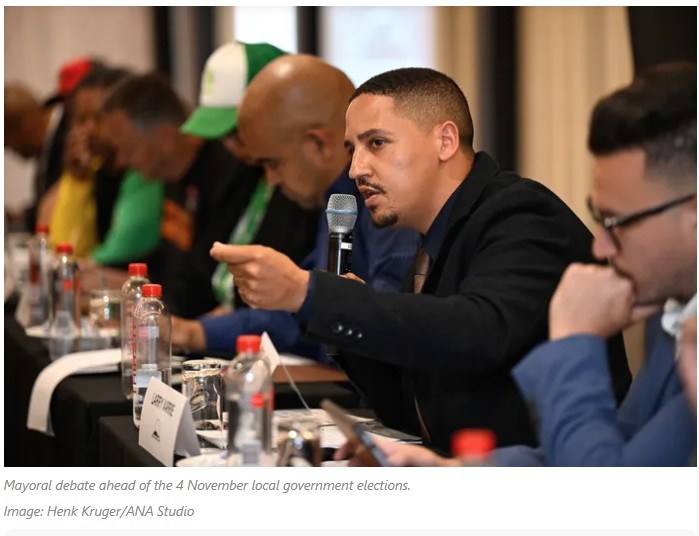
The engagement was held with the public and media at the National Media Group’s Cape Town elections town hall at The Capetonian Hotel in the CBD earlier this week.
Other heated topics included the City’s R114 million N2 Edge Safety Project, also known as the “N2 wall” project, and questions about where the National Coloured Congress (NCC) was when confronting gang leaders and drug dens.
During a panel discussion on gangs and crime interventions, Andrews said the City had offered various programmes, including the Ceasefire Project, which had rehabilitated gangsters and their peers.
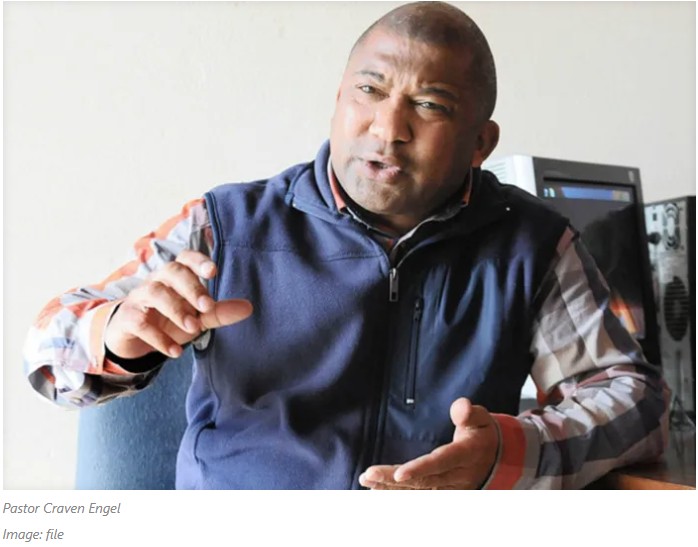
Andrews said he could not, but that the programme had been run by Engel and that he would have to research it.
The Hanover Park-based project was discontinued in 2018, after being run for five years with a budget of R5 million.
It aimed to target high-risk individuals in an attempt to reduce gang violence. The City withdrew, citing budget concerns. A new safety intervention, known as ShotSpotter, was subsequently introduced in communities such as Manenberg and Hanover Park.
In June, the City revealed that ShotSpotter, another multi-million-rand project, had come to an end and was under review.
Weekend Argus further probed Andrews about the Ceasefire's funding and the project’s success.
According to the city, via a parliamentary question and reply published in 2018, it revealed that Ceasefire team undertook 747 conflict mediations over the 2016/17 period.
It said that to date 2730 high risk individuals were assisted with a view to eventually exiting the gangs. During the 2016/17 period approximately 1090 high risk individuals and were enrolled in a variety of different outreach programmes.
Engel told Weekend Argus that, despite the funding being withdrawn, Ceasefire continued to operate under the new name Ceasefire Lite. The community-driven project had become a model for universities and crime experts and vulnerable children, he said.
“The Ceasefire project is still active but not with the City, it is managing itself on its own since the city withdrew in 2018, the programme had great success,” he said.
“The programme managed itself from 2013 to 2018, and then the City withdrew their support and we had to continue it, we cannot bring a gang intervention programme to a high risk community and then withdraw it and then you will lose your credibility.
“According to the data we have, the programme helped over 400 high risk youth, what we call transporters of violence and that is the guy that is going to shoot with the weapon, engaging with all the main line gangs, mediation. We had registered conflict resolutions between communities, gangs and stakeholders.
“Data between 2013 and 2018, showed that the programme reduced violence by 43% and it could be attributed to the programme.”
He said that, despite the ShotSpotter project no longer being in existence, they relied on their own boots on the ground to detect shootings. The project itself could determine when and where a shooting was likely to take place, he said.
“We were also part of the implementation of the ShotSpotter, we helped install it, we were part of the response team, to respond to gunfire detection, he said.
"We could predict where violence could most likely happen and we could send a safety note to 3000 members in the community about violence and where it is happening and why."
In response to Andrews’ comments, Jay Jay Idel, executive director of Fight Against Crime SA (FACSA), said the City must be able to showcase the programme’s success.
“Rehabilitation and youth development are important, but programmes must be measured by their outcomes. How many young people have been reached? How many have left gang involvement, found employment or returned to education?" he said.
Dr Llewellyn Macmaster, chairperson of the Cape Crime Crisis Coalition (C4), said the Ceasefire project existed because it was driven by the community.
“The work was done by people, trusted community members and violence interrupters, not by microphones. The technology was a tool, not the solution," he said.
He said C4 was demanding a fundamental shift in the City’s approach to safety. This included a public audit and the publication of comprehensive data, including information about communities affected by gun violence.
our Last Event: Looking forward to the Next One.

The Story I Tell
Every movement tells a story. Every story reveals His glory.
- Date: Saturday, 29 August 2026 | Time: Doors open at 4:30 PM | Show starts at 5:00 PM
- Location: PPC Hanover Park (10 Lansur Road) | Admission: R50

🚀 Your Next Move Starts Here:
Are you between 18 and 35 years old, currently unemployed, and not studying? It is time to reshape your future.The Work Readiness Programme at First Community Resource Centre (FCRC), in partnership with Beulah Africa Foundation NPC, gives you the exact tools, confidence, and community support you need to launch your career.
✨ What You Will Receive:
- Growth: Leadership and core life skills development.
- Job Prep: Expert CV writing and interview practice.
- Workplace Training: Practical skills for the modern workplace.
- Support: Dedicated mentorship to guide you every step of the way.
Your past does not define you. Your next decision does.
📥 Secure Your Spot Today | Spaces are strictly limited. | Take control of your career path right now.
📞 WhatsApp / Call Albert: 074 889 9056
📍 Visit Us In Person: | First Community Resource Centre NPC |10 Lansur Road |Hanover Park, Cape Town